Luxury Vinyl Plank Colors & Installation
Luxury vinyl plank has become the default flooring choice for Austin homes, and for good reason. It is waterproof, it shrugs off dog nails and dropped pans, and it floats over our slab foundations without complaint while the clay soil underneath does its seasonal swelling and shrinking. We install LVP every week across the metro — from 1950s ranches in Allandale and Crestview to new builds in Mueller — and the two questions we hear most are the same every time: which color should I pick, and what does installation actually involve?
Here is our honest rundown of both, based on what Austin homeowners are actually choosing right now and what a professional installation looks like from start to finish.
The Colors Austin Homeowners Are Choosing
The biggest shift over the past few years is the move away from gray. Cool gray LVP dominated the late 2010s, and it now reads as dated in a lot of listings. Buyers and designers have swung back toward warmth, and the current favorites reflect that.
- Light natural oak: pale, low-contrast planks with subtle grain. This is the single most requested look we install. It brightens rooms, hides dust, and pairs with almost any cabinet or wall color.
- Warm honey and blonde tones: a step warmer than natural oak, popular in homes going for that relaxed, sunlit Austin look. These play especially well with white oak cabinetry and cream walls.
- Greige: the compromise color — gray undertones warmed up with beige. If you loved gray but want something that will not look dated in five years, greige is the safe middle ground.
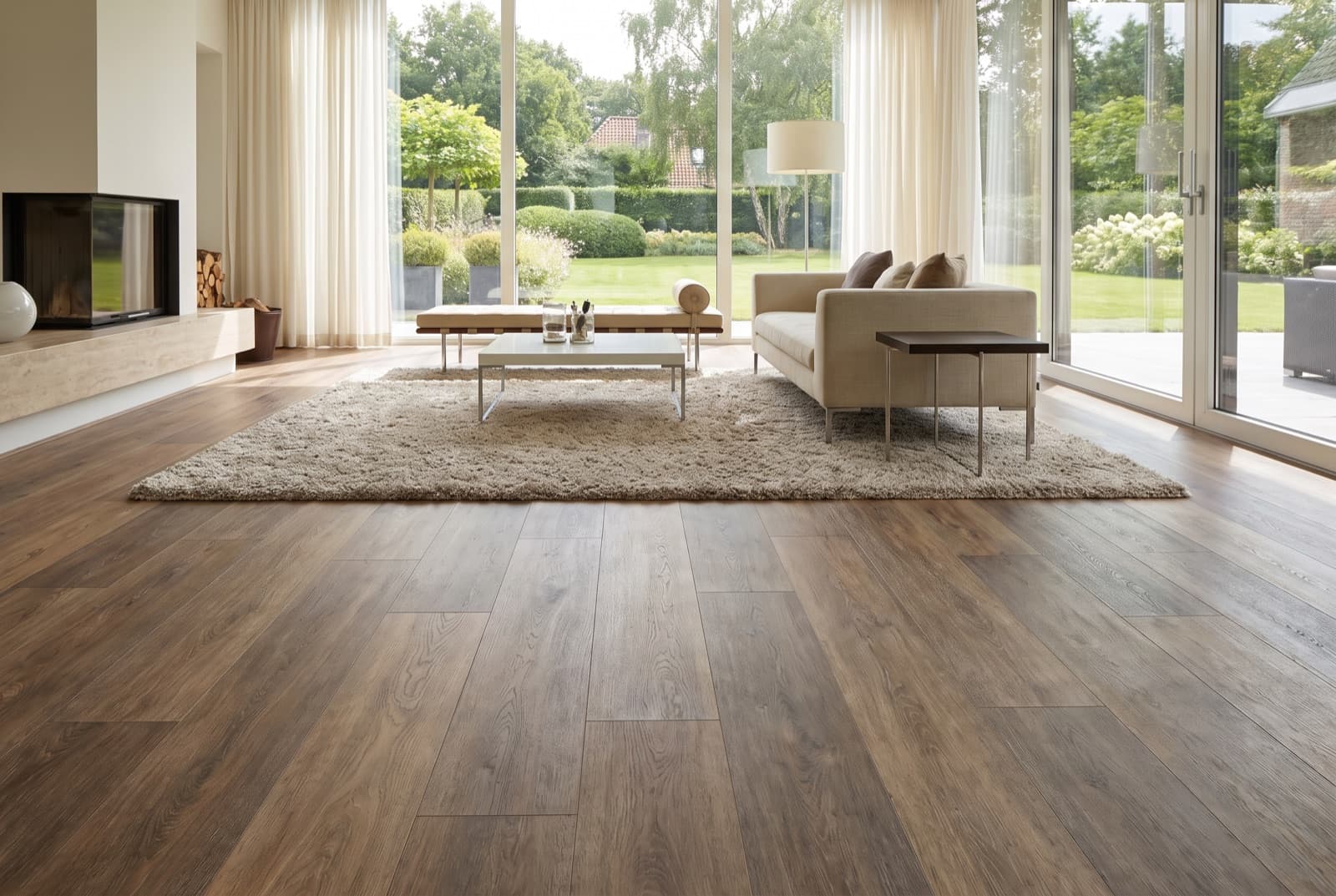
- Medium browns and light walnuts: making a quiet comeback in traditional homes in Tarrytown and Westlake, where very pale floors can feel out of place against classic trim and darker furniture.
Wide planks are the other clear trend. Seven-inch and nine-inch widths have largely replaced the old five-inch standard, and the wider format makes rooms feel larger with fewer seams. Longer planks — 60 inches and up — sell the wood look far more convincingly than short ones. Whatever color you land on, order samples and look at them in your own home, in your own light, next to your cabinets. Showroom lighting lies. Austin's strong natural light shifts colors warmer during the day, and a plank that looked perfect under fluorescents can read orange at 4 p.m. in a west-facing living room.
How Professional Installation Works
A typical whole-home LVP installation takes three to five days. Day one is tear-out: old carpet, tile, or worn flooring comes up and gets hauled off. Tile removal is the messy one — expect noise and dust, though a good crew runs containment and cleans up daily.
Slab prep is the step that separates a floor that lasts twenty years from one that clicks and gaps within two. Most Austin homes sit on concrete slabs, and those slabs are rarely flat. We grind high spots and fill low spots with self-leveling compound, because LVP will telegraph every hump and dip beneath it. We also check the slab's moisture with a meter before laying anything — a habit that matters even more here than the flatness check, given how much moisture our clay soil can push into a slab after a wet spring.
The planks themselves click together and float over an underlayment pad, with an expansion gap left at every wall so the floor can move with temperature swings. Most quality LVP now ships with the pad attached, which speeds things up. In rooms where a solid feel matters, glue-down installation is worth discussing — it costs more in labor but eliminates the slightly hollow footstep sound that floating floors can have. Installation finishes with baseboards or quarter-round to cover the expansion gap, plus clean transitions at doorways and tile borders. Those trim details are where you can spot the difference between a professional job and a rushed one.
Where LVP Shines — and Where It Doesn't
LVP is the right answer for most main living areas, kitchens, laundry rooms, and bathrooms — anywhere water, pets, and daily traffic are part of life. It handles Austin's foundation movement better than tile, which cracks, and better than solid hardwood, which gaps and cups with our humidity swings. Where it falls short: it cannot be refinished like real wood, and in higher-end neighborhoods where buyers expect hardwood, LVP may not carry the same resale weight. For most households, though, the durability math wins.
One buying tip: the difference between builder-grade LVP and a premium product is mostly in the wear layer. Look for 20 mil or thicker for busy households. A 12 mil bargain plank will show traffic paths in a few years; a 20-22 mil plank will not.
Ready to See Samples in Your Home?
The best way to choose a color is to see full-size samples on your own floor for a few days. We bring boards from the brands we trust, check your slab while we are there, and give you a straight answer on what your project involves. Learn more about our interior flooring services or contact us to set up a free in-home estimate.
Need Help With This?
Our licensed professionals are ready to help. Get a free, no-obligation consultation.
Get a QuoteRelated Services

Austin Home Service Pros
The Austin Home Service Pros team shares expert tips, maintenance guides, and home improvement advice to help Austin homeowners make informed decisions.